Heavy loads, long machining travel, and complex setups can affect accuracy, efficiency, and production costs. Choosing the wrong gantry machining center may lead to insufficient travel, poor cutting stability, or unnecessary investment.
But how do you know which machine is right for your workpieces? Should you focus on table capacity, machine rigidity, spindle performance, or gantry structure?
This guide walks you through the key factors to consider when choosing a gantry machining center, helping you match machine specifications to your actual machining needs and avoid costly purchasing mistakes.
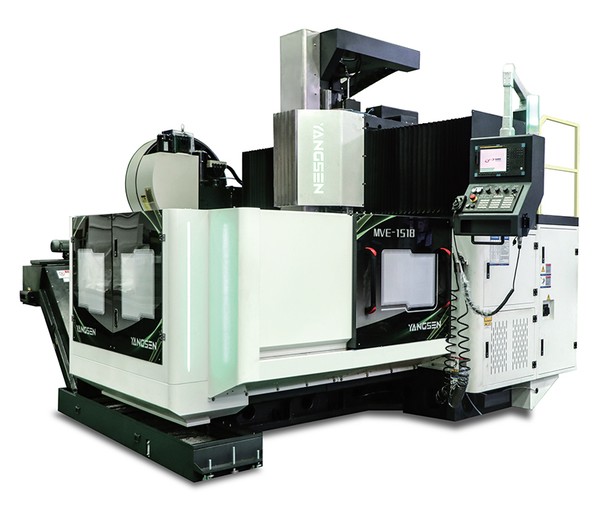
Before choosing a gantry machining center, you need to understand what your workpieces require. Part dimensions, weight, material, and machining operations directly affect the machine size, structure, and performance you need.
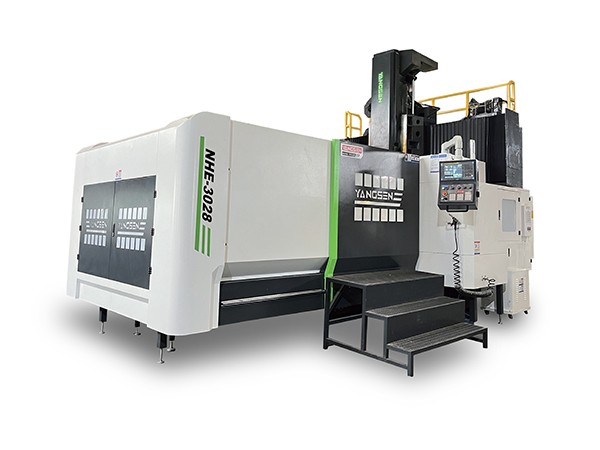
Start with the largest and heaviest workpiece you plan to machine. Don't select a machine based only on its X, Y, and Z-axis travel.
Consider the following factors:
For example, a 3,000 mm long workpiece does not automatically mean a machine with 3,000 mm X-axis travel is sufficient. You must also account for the toolpath and machining clearance.
Different materials and cutting processes place different demands on your machine.
|
Workpiece Material |
Machining Requirements |
What to Prioritize |
|
Cast Iron |
Heavy milling, boring, drilling |
Machine rigidity, spindle torque, vibration control |
|
Carbon Steel |
Roughing, slotting, deep drilling |
Cutting stability, spindle power, structural strength |
|
Aluminum Alloy |
High-speed milling, finishing |
Spindle speed, feed rate, chip removal |
|
Mold Steel |
Complex surfaces, precision finishing |
Thermal stability, accuracy, spindle performance |
If your production involves both heavy roughing and precision finishing, choose a machine that can maintain cutting stability under heavy loads while meeting your required accuracy.
A machine that fits your workpiece is not necessarily capable of meeting your production goals. You also need to consider machining accuracy and production volume.
Ask yourself:
For high-precision parts, pay attention to machine geometry, thermal stability, and repeatability.
For continuous production, also consider tool-changing capacity, chip removal, and machine reliability.
The structure of a gantry machining center affects how it handles heavy loads, maintains cutting stability, and uses workshop space. The best choice depends on whether your workpiece can move safely during machining and how much clearance you need.
|
Your Machining Needs |
Recommended Structure |
|
Large molds and castings within table load limits |
Moving-table gantry |
|
Extra-long or extremely heavy workpieces |
Moving-column gantry |
|
Similar workpiece heights and heavy cutting |
Fixed-beam design |
|
Workpieces with significantly different heights |
Adjustable-crossrail design |
In a moving-table design, the gantry frame remains stationary while the worktable carries the workpiece along the X-axis.
This structure is suitable for large molds, machine components, and castings that fit within the table's load capacity. The fixed gantry provides a stable structure for heavy milling and precision machining.
However, as workpiece weight increases, the moving load also increases. You must consider table load capacity, axis performance, and the additional floor space required for table movement.
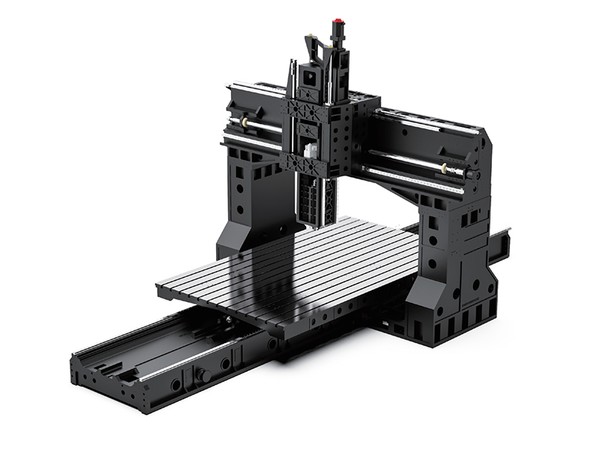
A moving-column gantry machining center keeps the worktable stationary while the gantry structure travels along the machine bed.
This design is particularly useful for extra-long or heavy workpieces, such as machine beds, large structural frames, and industrial equipment components.
Because the workpiece remains stationary, you can avoid moving several tons of material during machining. However, you still need to check gantry rigidity, available travel, and installation space.
The crossrail design determines how much vertical clearance and machining flexibility you have.
Once you have selected the right gantry structure, the next step is to check whether the machine specifications match your actual machining needs. A larger machine does not always mean better performance. Focus on the parameters that affect workpiece capacity, cutting stability, and machining accuracy.
Axis travel determines how far the cutting tool can move relative to your workpiece. However, machine travel is not the same as usable machining space.
Your worktable must support both the workpiece and its fixtures without exceeding the machine's rated capacity.
Check the table dimensions, maximum load, T-slot arrangement, and allowable load distribution. A heavy workpiece with an uneven center of gravity may require additional support or special fixturing.
A common purchasing mistake is checking axis travel while overlooking the physical space between the columns and beneath the spindle.
Pay attention to:
A machine may have sufficient axis travel but still be unable to accommodate your workpiece safely.
Spindle selection should depend on your workpiece material and cutting operations.
For heavy roughing of steel or cast iron, prioritize sufficient torque at the required cutting speed and stable power delivery. For aluminum machining or finishing operations, higher spindle speeds may be more important.
Do not compare machines based only on maximum spindle speed or motor power. Check their torque and power curves to understand actual cutting performance.
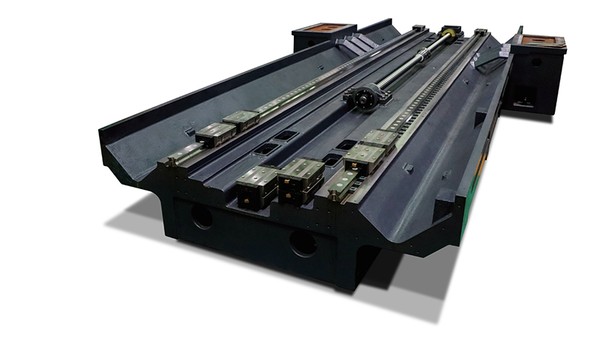
Large workpieces often require long cutting paths and high material removal rates. Machine rigidity directly affects vibration, cutting stability, and surface finish.
Large machining dimensions make accuracy control more challenging, especially over long travel distances.
Check both positioning accuracy and repeatability, but remember that these values do not directly represent finished-part accuracy.
For precision large-part machining, also consider thermal compensation, machine geometry, fixture stability, and measurement methods.
The right machine configuration depends on the operations you need to complete. Additional features can improve machining efficiency, but unnecessary options increase your investment costs.
List all machining operations required for your workpiece before choosing optional equipment. Prioritize configurations that reduce repeated clamping, improve accuracy, and shorten machining time rather than paying for features you rarely use.
|
YANGSEN Series |
Key Features |
Recommended Applications |
|
M-Series |
Compact gantry design, 1,500–3,000 mm X-axis travel, high rigidity |
Medium-to-large molds, castings, and general heavy milling |
|
N-Series |
Larger gantry structure, X-axis travel up to 7,000 mm in listed models |
Large structural components, heavy milling, and boring |
|
X-Series (XVE/XHE) |
Heavy-duty gantry with linear-guide or square-ram configurations; X-axis travel up to 10,000 mm |
Heavy-duty machining of large steel and cast-iron components |
|
X-Series (XVP/XHP) |
Moving double-column structure with X-axis travel from 13,000 to 25,000 mm |
Extra-long, heavy workpieces and large industrial structures |
|
K-Series (K-Box-in-Box) |
Symmetrical box-in-box beam design with five-axis head configurations |
Large aluminum components and complex multi-axis machining |
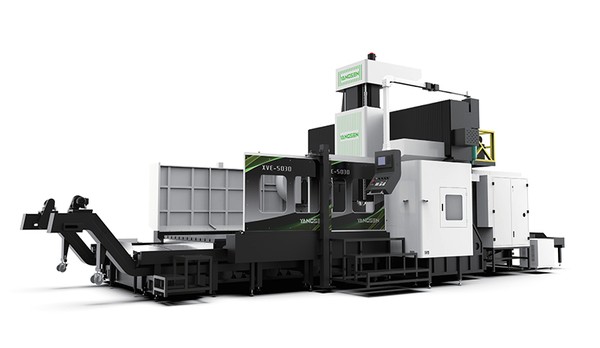
Match the Machine to Your Application
Before purchasing a gantry machining center, you should verify more than its technical specifications. Make sure the machine fits your workshop, machining requirements, and long-term production needs.
Q: How much larger should a gantry machining center be than my workpiece?
A: The machine must provide enough space for your workpiece, fixtures, and the full machining process. There is no fixed size allowance for every application. You should check axis travel, distance between columns, spindle clearance, and tool accessibility.
Q: Is a moving-column gantry machining center better for heavy workpieces?
A: A moving-column gantry machining center is generally more suitable for extremely heavy or extra-long workpieces. Its stationary worktable eliminates the need to move the workpiece during machining. However, a moving-table design may be more cost-effective if your workpiece is within its load capacity and travel range.
Q: Can one gantry machining center handle both roughing and finishing?
A: Yes, a properly configured gantry machining center can perform both heavy roughing and precision finishing. Heavy cutting requires sufficient spindle torque and machine rigidity, while finishing depends on positioning accuracy, thermal stability, and vibration control.
Q: Should I choose a 3-axis or 5-axis gantry machining center?
A: Choose a 3-axis machine for standard milling and drilling, or a 5-axis machine for complex surfaces and multi-angle machining. A 3-axis machine is usually sufficient for flat surfaces and basic operations. A 5-axis configuration allows you to access more machining angles, reducing repeated setups for complex workpieces.
Q: How can I verify a gantry machining center's accuracy before buying?
A: The most reliable approach is to review accuracy inspection reports and request a machining test using a representative workpiece. Check positioning accuracy, repeatability, and machining results under actual cutting conditions. For large precision parts, also consider thermal stability and accuracy over long travel distances.
Q: What information should I provide when requesting a gantry machining center quotation?
A: You should provide your workpiece drawings, dimensions, weight, material, tolerances, and machining requirements. Also include your production volume, preferred CNC system, and any special tooling needs. Complete information helps the supplier select a suitable machine, recommend necessary configurations, and prepare an accurate quotation.
Choosing the right gantry machining center starts with understanding your workpiece requirements. Size, weight, material, and machining operations determine the machine structure, travel range, spindle performance, and configurations you need. The right choice should balance machining capability, accuracy, efficiency, and long-term operating costs.
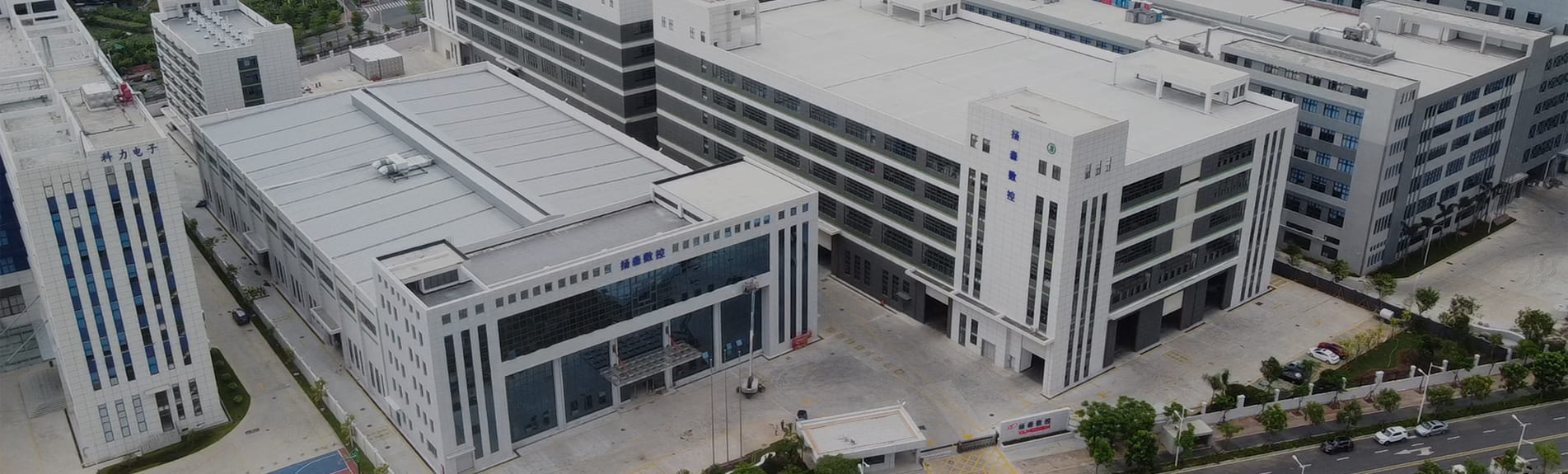
CNC YANGSEN offers a range of gantry machining solutions for different workpiece sizes and machining needs. Contact our team with your workpiece drawings and technical requirements to find the most suitable machine configuration.
Contact CNC Yangsen to find the right CNC machining solution for your production needs.