
If your finishing process is taking too long, costing too much, or still not delivering the surface quality you expect, you’re not alone.
What you really need isn’t just a better tool, but a smarter way to use your CNC machining center more efficiently.
In this article, you’ll learn how circle segment cutters can help you shorten cycle times, improve surface finish, and get more output from your existing machines—especially if you’re working with complex surfaces or using a 5-axis CNC machine.
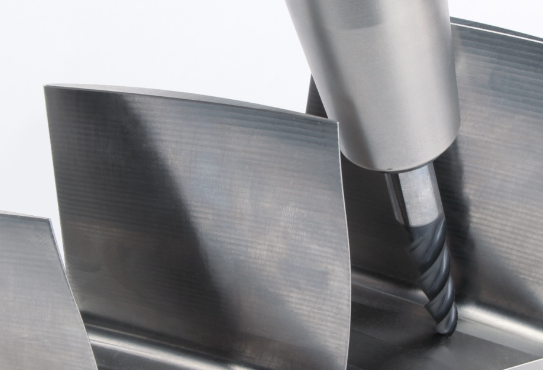
A circle segment cutter is a specialized CNC cutting tool designed for high-efficiency surface finishing.
Unlike traditional ball nose end mills, it features a much larger effective radius, allowing it to cover more surface area in a single pass.
Instead of cutting point by point, this type of tool works more like a “wide contact” cutter—making it ideal for machining complex curves and 3D surfaces.
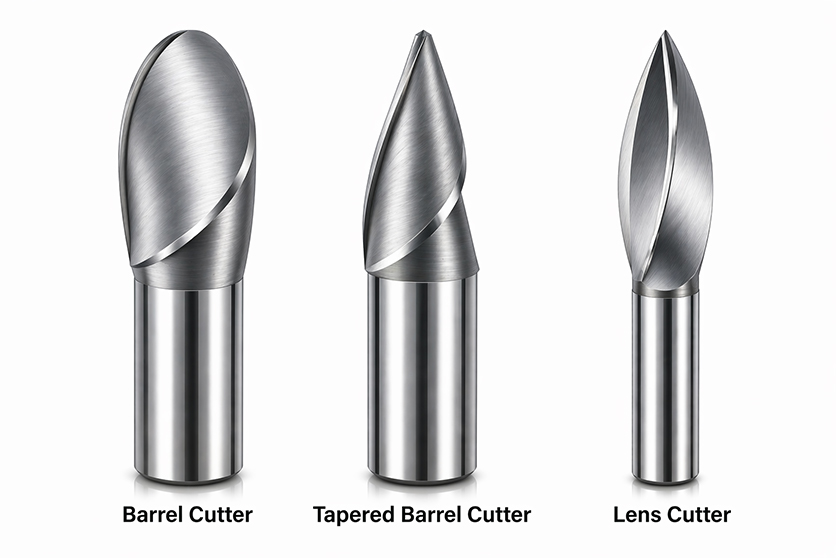
Barrel Cutters – Best for general curved surface machining
Tapered Barrel Cutters – Ideal for angled or deep surfaces
Lens Cutters – Suitable for fine finishing and tight geometries
When used on a CNC machining center, especially a 5-axis CNC machine, circle segment cutters allow you to:
Increase step-over without losing precision
Reduce toolpath passes
Achieve smoother surfaces with less effort
You remove more material, in less time, with better results.
The key difference lies in how the tool contacts the surface.
With a traditional ball nose end mill, cutting happens at a single point.
That means small step-over, more toolpaths, and longer machining time.
Circle segment cutters work differently.
They use a large radius cutting edge to create a line contact instead of a point.
This allows you to increase the step-over significantly while still maintaining a smooth surface.
This means:
You can remove more material in each pass
You need fewer toolpaths to finish the same surface
You reduce total machining time on your CNC machining center
To make this work effectively, tool orientation is critical.
That’s why circle segment cutters perform best on:
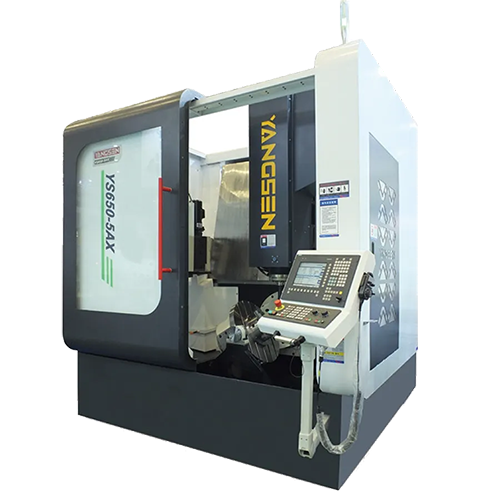
5-axis CNC machining centers
High precision, high stability CNC machines
These machines can keep the tool at the optimal angle, ensuring consistent contact and better results.
If your finishing process is slowing down your production, this is where you’ll feel the biggest difference.
Because of the large effective radius, circle segment cutters allow a much larger step-over.
That means fewer passes, shorter toolpaths, and significantly reduced cycle time.
You don’t just get speed—you get quality.
With a smoother cutting path and reduced scallop height, circle segment cutters produce a much finer surface directly from machining.
For you, that means:
Less manual polishing
More consistent surface quality
Faster delivery to your customer
Your machine time is expensive.
When finishing takes less time, your CNC machining center becomes available sooner for the next job.
That means:
Higher machine utilization
More parts produced per day
Better return on your equipment investment
Instead of concentrating cutting force on a single point, the load is distributed across a larger contact area.
This results in:
Reduced tool wear
More stable cutting performance
Fewer unexpected tool changes
Combined with a rigid, high-precision CNC machine, tool life can be significantly extended.
If you’re machining complex geometries, traditional tools quickly reach their limits.
Circle segment cutters are especially effective for:
Mold and die surfaces
Aerospace components
Automotive parts with curved profiles
When used on a 5-axis CNC machining center, they can maintain optimal contact even on difficult angles and deep surfaces.
At the end of the day, everything comes down to cost.
By combining faster machining, better surface quality, and longer tool life, you can:
Reduce total machining time
Lower labor and finishing costs
Improve overall production efficiency
You spend less time, less effort, and get better results.
In surface finishing, circle segment cutters are not the only option.
Many shops still rely on ball nose end mills, which have long been a standard choice for machining complex surfaces on a CNC machining center.
Both tools can achieve fine surface finishes, but they do so in very different ways.
Circle segment cutters are designed for efficiency, using a large effective radius to cover more area in each pass.
Ball nose end mills, on the other hand, rely on point contact, which requires a smaller step-over and more toolpaths.
|
Feature |
Circle Segment Cutters |
Ball Nose End Mills |
|
Cutting Contact |
Line / large radius |
Point contact |
|
Step-over |
Large |
Very small |
|
Machining Speed |
Very high |
Relatively slow |
|
Surface Finish |
Excellent |
Moderate |
|
Toolpath Length |
Shorter |
Longer |
|
Machine Requirement |
Best on a 5-axis CNC machine |
Works on 3-axis machines |
Choose Circle Segment Cutters if you want to:
Reduce finishing time significantly
Improve surface quality without extra polishing
Increase output from your CNC machining center
Machine large or complex curved surfaces
Best results when used on a 5-axis CNC machining center
Choose Ball Nose, End Mills if you need to:
Machine small features or tight areas
Work on simple geometries
Use standard 3-axis CNC machines
Handle general-purpose finishing tasks
Circle segment cutters can significantly improve efficiency and surface quality—but their performance is highly dependent on the machine they run on.
If your current setup doesn’t provide enough stability, precision, or flexibility, you may not see the full benefits these tools are designed to deliver.
Unlike traditional tools, circle segment cutters rely heavily on maintaining the correct contact angle with the workpiece.
In many cases, especially when machining complex 3D surfaces, this cannot be achieved with a fixed tool position.
A 5-axis CNC machining center allows continuous adjustment of the tool angle, ensuring:
Consistent cutting contact across the surface
Better surface finish on curved geometries
More efficient toolpath execution
Without 5-axis capability, the tool cannot fully utilize its large effective radius, limiting its advantage.
Because circle segment cutters engage a larger area of the material, cutting forces are distributed over a wider zone.
This brings higher demands on machine rigidity.
A high-rigidity CNC machining center helps to:
Minimize vibration during cutting
Maintain dimensional accuracy
Prevent tool deflection
If the machine structure is not stable enough, it may lead to inconsistent results or reduced tool life.
One of the key advantages of circle segment cutters is the ability to increase step-over while maintaining surface quality.
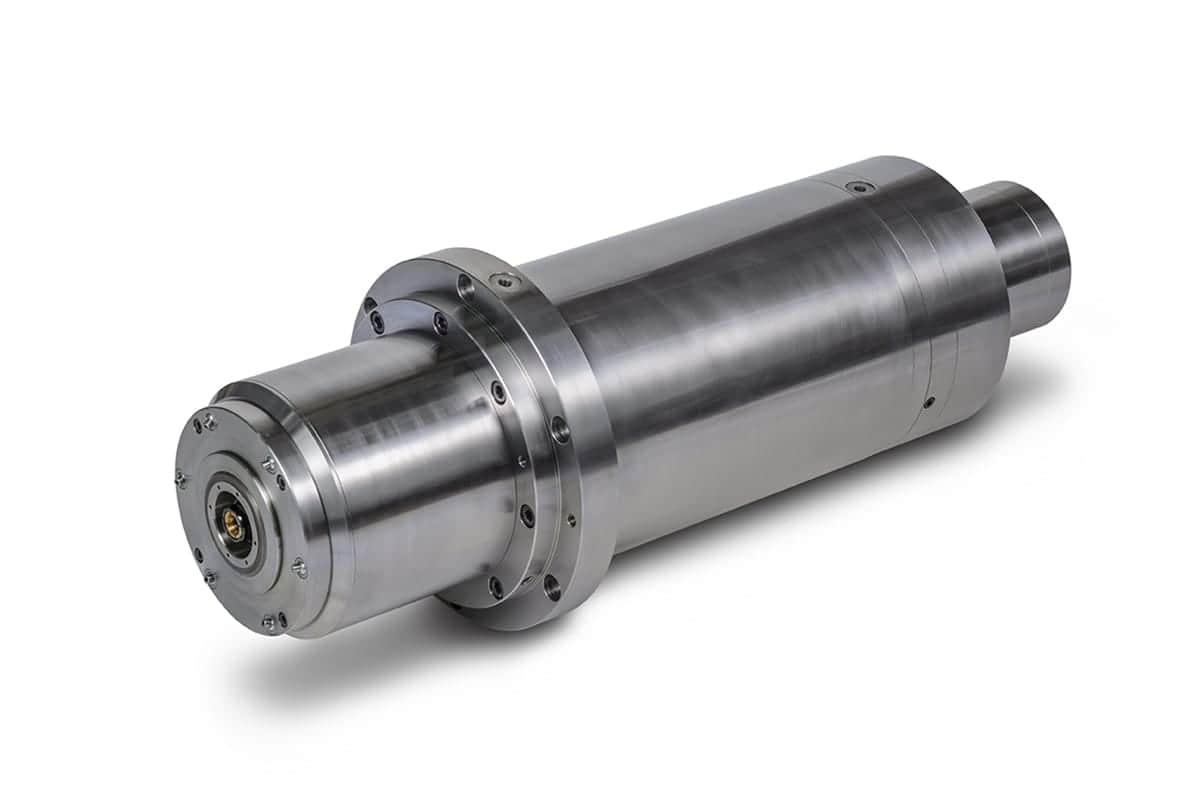
To support this, the spindle must handle higher feed rates smoothly.
A high-speed machining center enables:
Faster material removal without compromising finish
More stable cutting at higher speeds
Improved overall productivity
Without sufficient spindle performance, the expected efficiency gains may not be realized.
Circle segment cutters typically require more advanced machining strategies, especially in multi-axis applications.
This means the CNC system must be capable of handling:
Complex toolpath calculations
Smooth multi-axis interpolation
Precise positioning and motion control
A modern CNC control system ensures that the cutter follows the intended path accurately, which directly affects both surface quality and machining efficiency.
In addition to the machine itself, the programming side also plays a critical role.
Not all CAM software supports optimized strategies for circle segment cutters.
To fully benefit from this tool, your CAM system should support:
Barrel toolpath strategies
Multi-axis tool orientation control
Efficient finishing algorithms
Without proper programming support, even the best machine and tool combination cannot perform at its full potential.
If you're not achieving the expected improvements in speed or surface quality, the limitation may not be the cutter—it’s often the machine setup behind it.
In practice, many manufacturers see the biggest gains only after combining circle segment cutters with a more capable CNC machining center, especially one with multi-axis capability and high dynamic performance.
Not every job requires a circle segment cutter.
The key is knowing when it actually gives you an advantage.
If most of your machining time is spent on finishing rather than roughing, it’s a clear sign your process can be optimized.
Circle segment cutters are especially effective when:
Finishing takes too long
Toolpaths are too dense
Your CNC machining center is tied up on surface work
This is where switching tools can immediately improve efficiency.
For parts with wide curved areas, traditional tools often struggle to balance speed and quality.
Circle segment cutters are a better fit when you’re machining:
Large freeform surfaces
Mold cavities
Aerospace or automotive components
On a 5-axis CNC machining center, they can maintain better contact across changing angles.
If your parts require a fine surface finish straight from machining, tool choice becomes critical.
You should consider circle segment cutters when:
You want to reduce polishing work
Surface consistency is important
Rework is becoming a problem
They help you achieve a smoother finish directly, saving time in later processes.
If your machines are always running but output is still limited, the issue may not be capacity—it may be efficiency.
Circle segment cutters help you:
Shorten cycle times
Free up your CNC machining center faster
Increase overall production throughput
Sometimes the goal isn’t just to solve a problem, but to improve your overall process.
Circle segment cutters are worth considering when:
You’re moving toward high-efficiency machining
You’re introducing 5-axis CNC machining
You want to get more value from your equipment investment
If your current finishing process feels slow, costly, or limiting your output, it’s probably the right time to consider circle segment cutters.
What is a circle segment cutter mainly used for?
Circle segment cutters are mainly used for finishing large curved surfaces and complex 3D geometries.
They are especially effective in applications where both high surface quality and shorter machining time are required, such as mold making and aerospace components.
Do I need a 5-axis CNC machine to use circle segment cutters?
Not always, but it makes a big difference.
While some applications can run on a 3-axis CNC machining center, the real advantage of circle segment cutters comes from precise tool orientation.
A 5-axis CNC machine allows the tool to maintain optimal contact, resulting in better surface finish and higher efficiency.
How much efficiency improvement can I expect?
It depends on the application, but in many cases, finishing time can be reduced significantly.
Because of the larger step-over, circle segment cutters can reduce the number of toolpaths, which directly shortens cycle time and improves machine utilization.
Are circle segment cutters better than ball nose end mills?
They are not always “better”—they are more efficient in the right situations.
For large surface finishing, circle segment cutters offer clear advantages in speed and surface quality.
However, ball nose end mills are still useful for small features, tight areas, and general-purpose machining.
Why am I not seeing the expected results with circle segment cutters?
In many cases, the limitation is not the tool itself.
Performance depends on several factors, including:
Machine rigidity and precision
Toolpath strategy
CAM programming capability
If any of these are lacking, the cutter may not perform as expected.
Can circle segment cutters reduce overall machining costs?
Yes, but the savings come from multiple factors combined.
By reducing machining time, minimizing polishing work, and improving tool life, you can lower overall production costs and increase output from your CNC machining center.
Circle segment cutters offer a clear advantage when it comes to finishing efficiency, surface quality, and overall machining performance.
But the real value comes from how you use them.
When paired with a capable CNC machining center, especially a 5-axis CNC machine, they can significantly reduce cycle time and help you get more out of every machining job.
If you’re looking to improve productivity without simply adding more machines, optimizing your tooling strategy is a smart place to start.
And if you’re ready to take it further, combining the right cutting tools with the right equipment will make the biggest difference.