Choosing between a 3-axis and a 5-axis CNC machine is one of the most common decisions manufacturers face.
At first glance, the difference may seem simple — fewer axes vs more axes. But in reality, your choice will directly affect machining efficiency, production cost, part quality, and even your long-term competitiveness.
How do you determine which one is right for your parts?
In this guide, we’ll break down the real differences between 3-axis and 5-axis CNC machines, and more importantly, help you choose the best solution based on your actual machining needs.
CNC stands for Computer Numerical Control. It's a technology that uses computers to control machine tools, such as lathes, mills, routers, and grinders. CNC machines translate digital instructions into precise movements, allowing for the automated fabrication of parts and components with high accuracy and consistency.
In CNC machining, designers create a digital model of the part they want to produce using Computer-Aided Design (CAD) software. This digital model is then converted into instructions, often in G-code, which specifies the exact movements and operations required to fabricate the part.
A 3 axis CNC machine moves along the X, Y, and Z directions, allowing cutting tools to approach the workpiece from a single direction.
It is widely used for machining flat surfaces, simple contours, and basic structural parts. For many standard components, 3 axis machines offer a cost-effective and reliable solution.
Typical applications include:
Plates and brackets
Simple housings
Standard mechanical parts
If your parts do not require complex angles or multi-face machining, a 3 axis CNC machine is often the most economical choice.
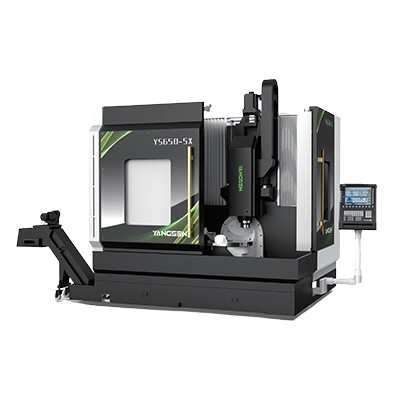
A 5 axis CNC machine adds two rotational axes to the standard X, Y, and Z movements, allowing the tool to approach the workpiece from virtually any direction.
This makes it possible to machine complex geometries, deep cavities, and multi-face parts in a single setup.
Key advantages include:
One-time clamping for full machining
Higher accuracy and consistency
Reduced setup time and manual intervention
Typical applications include:
Aerospace components
Mold & die manufacturing
Impellers and complex curved parts
If your parts require high precision and complex geometry, 5 axis machining is often the best solution.
Cost-effectiveness: 3-axis CNC machines are generally more affordable to purchase, operate, and maintain compared to higher-axis systems. This makes them accessible to a wider range of manufacturers, particularly small to medium-sized businesses.
Simplicity: Operating a 3-axis CNC machine is relatively straightforward, requiring less specialized training and expertise compared to higher-axis systems. This simplicity can result in faster setup times and easier integration into existing manufacturing processes.
Versatility: Despite their simplicity, 3-axis CNC machines are capable of performing a wide range of machining operations, including cnc milling, drilling, cutting, and engraving. They can produce parts with moderate complexity and are suitable for various materials, from metals to plastics and wood.
Stability and reliability: With fewer moving parts and axes, 3-axis CNC machines tend to be more stable and less prone to mechanical issues. This reliability contributes to consistent performance and reduced downtime during production.
Limited capability for complex geometries: One of the most significant limitations of 3-axis CNC machines is their inability to access certain angles and orientations required for machining highly intricate and complex parts. This limitation may necessitate multiple setups or additional operations to complete the part, resulting in increased production time and cost.
Reduced efficiency for certain operations: Some machining tasks, such as contouring or sculpting, may be less efficient on 3-axis machines compared to higher-axis systems. The lack of additional rotational axes can lead to inefficient tool paths and slower material removal rates, especially for parts with curved surfaces or irregular shapes.
Manual repositioning: In certain cases, 3-axis CNC machines may require manual repositioning of the workpiece or tool to access certain features or machining operations. This manual intervention can introduce errors, increase setup time, and limit the overall efficiency of the machining process.
Limited scalability: While 3-axis CNC machines are suitable for a wide range of applications, they may not be ideal for highly specialized or advanced machining requirements. As manufacturing needs evolve and become more complex, businesses may need to invest in higher-axis systems to maintain competitiveness and meet customer demands.
Increased capability for complex geometries: The primary advantage of 5-axis CNC machines is their ability to access multiple angles and orientations, allowing for the machining of highly intricate and complex parts. With two additional rotational axes, these machines can reach features and surfaces that would be difficult or impossible to reach with 3-axis systems, enabling more efficient and precise machining of complex geometries.
Reduced setup time and increased productivity: 5-axis CNC machines can perform multiple operations in a single setup, eliminating the need for manual repositioning of the workpiece or tool. This results in shorter setup times, reduced idle time, and increased productivity compared to 3-axis systems. Additionally, the ability to approach the part from multiple angles often leads to more efficient tool paths and faster material removal rates, further enhancing productivity.
Improved surface finish and accuracy: The additional freedom of movement provided by 5-axis CNC machines enables smoother tool paths and finer control over cutting parameters, resulting in improved surface finish and dimensional accuracy. This is particularly beneficial for applications requiring high precision and surface quality, such as aerospace components, medical devices, and mold making.
Versatility and flexibility: 5-axis CNC machines are capable of performing a wide range of machining operations, including milling, drilling, cutting, and contouring, on various materials. Their versatility makes them suitable for a diverse range of industries and applications, from aerospace and automotive to medical and defense.
Higher cost: 5-axis CNC machines are typically more expensive to purchase, operate, and maintain compared to 3-axis systems. The increased complexity of these machines, including additional axes, specialized components, and advanced control systems, contributes to higher upfront costs and ongoing expenses.
Specialized programming and expertise: Programming and operating a 5-axis CNC machine require specialized skills and expertise and advanced CAM (Computer-Aided Manufacturing) software. The complexity of programming tool paths and optimizing cutting parameters for multiple axes can pose challenges for operators, necessitating comprehensive training and experience.
Increased setup and programming time: While 5-axis CNC machines offer advantages in terms of reduced setup time during production, they may require longer setup and programming time initially. The complexity of setting up workholding fixtures, defining tool paths, and optimizing cutting strategies for multiple axes can prolong the preparation phase and delay production start-up.
Maintenance and calibration: Due to their higher complexity and precision requirements, 5-axis CNC machines may require more frequent maintenance and calibration to ensure optimal performance and accuracy. This includes regular inspection and adjustment of mechanical components, as well as calibration of the machine's control system and feedback mechanisms.
3-axis CNC machines are versatile tools used across a wide range of industries for various applications. Some common applications include:
3-axis CNC machines are widely used for rapid prototyping in industries such as product design, automotive, aerospace, and consumer electronics. They enable the efficient fabrication of prototype parts and components with moderate complexity, allowing designers to iterate on designs quickly and test functionality before moving to full-scale production.
Widely used in machine shops, 3-axis CNC machines perform tasks such as milling, drilling, and cutting across diverse materials for various applications.
In the woodworking industry, 3-axis CNC machines are used for manufacturing furniture components such as panels, frames, legs, and intricate designs. They enable precise cutting, shaping, and carving of wood and other materials, allowing furniture manufacturers to produce custom pieces with high accuracy and consistency.
In the signage industry, 3-axis CNC machines carve materials like wood and metal with precision, creating custom signs and logos for indoor and outdoor use.
Employed in mold-making processes, 3-axis CNC machines produce molds and dies for injection molding and casting applications with high precision.
While limited to highly complex parts, 3-axis CNC machines are used for machining simpler components like engine blocks and brackets in the automotive and aerospace industries.
Now, let’s go through the applications of 5-axis CNC machines.
5-axis CNC machines are used to manufacture critical aerospace components such as turbine blades, engine casings, and structural components with intricate geometries and tight tolerances. The ability to machine complex shapes and contours accurately makes 5-axis machining ideal for aerospace applications where lightweight materials and aerodynamic designs are crucial.
Employed for manufacturing engine blocks, cylinder heads, transmission components, and molds with intricate shapes and tight tolerances, enhancing efficiency and quality.
Utilized in the production of surgical instruments, orthopedic implants, and prosthetics with precise details and biocompatible materials, meeting stringent medical standards.
5-axis CNC machining is essential in the production of cutting tools, dies, and molds used in various manufacturing processes. These machines can create complex tool geometries with precise cutting edges and profiles, improving the efficiency and quality of machining operations in industries such as aerospace, automotive, and general manufacturing.
Enables artists to create intricate sculptures, artwork, and architectural elements with fine details and complex shapes, expanding creative possibilities and artistic expression.
Used for rapid prototyping and low-volume production of complex parts in various industries, reducing time-to-market and accelerating product development cycles.
Let’s summarize the difference in tabular form.
|
Feature |
3-Axis CNC |
5-Axis CNC |
|
Axes of movement |
X, Y, Z |
X, Y, Z, A, B |
|
Suitable for parts |
Simpler, or flat |
Complex, 3D geometries |
|
Affordability |
More affordable |
More expensive |
|
Ease of programming |
Easier to program |
More complex programming |
|
Setup time |
Faster set-up times |
Potentially longer set up times |
|
Precision |
Good precision |
Higher precision |
|
Production speed |
Faster for simpler parts |
Potentially faster for intricate parts |
1. What is the main difference between 3 axis and 5 axis CNC machines?
The main difference lies in movement capability and machining flexibility. A 3 axis CNC machine operates along X, Y, and Z directions, making it suitable for simple parts. A 5 axis CNC machine adds rotational movement, allowing machining from multiple angles in one setup, which is ideal for complex and high-precision components.
2. When should I choose a 3 axis CNC machine?
A 3 axis CNC machine is the right choice when your parts are relatively simple, machining is mainly done on one surface, and cost control is a priority. It is widely used for standard components and high-volume production where efficiency and affordability are important.
3. When is a 5 axis CNC machine necessary?
A 5 axis CNC machine is necessary when parts have complex geometries, curved surfaces, or require machining on multiple sides. It is commonly used in industries such as aerospace, mold making, and medical manufacturing where precision and efficiency are critical.
4. Is a 5 axis CNC machine worth the higher cost?
Although the initial investment is higher, a 5 axis CNC machine can reduce setup time, improve machining accuracy, and increase overall efficiency. For complex or high-value parts, it often delivers a better return on investment in the long run.
5. Can a 3 axis CNC machine replace a 5 axis machine?
In some cases, yes—but it usually requires multiple setups and more manual intervention. This can increase production time and reduce accuracy. For simple parts, 3 axis machining is sufficient, but for complex applications, 5 axis machining is more efficient and reliable.
6. How do I choose the right CNC machine for my application?
The best choice depends on your part complexity, tolerance requirements, production volume, and budget. If you are unsure, it is recommended to evaluate your drawings with a professional supplier who can suggest the most suitable solution.
Both 3 axis and 5 axis CNC machines have their own advantages, and the right choice depends on your actual machining needs.
For simple parts and cost-sensitive production, a 3 axis CNC machine is a practical and reliable solution. For complex geometries, multi-face machining, and higher precision requirements, a 5 axis CNC machine offers greater efficiency, accuracy, and long-term value.
By understanding your part complexity, production volume, and budget, you can make a more informed decision and choose the machine that truly supports your business growth.
Not sure which solution is right for you? Send us your drawings and get expert advice today.