Modern CNC machining operations depend on precision as their basic essential requirement. The aerospace, automotive, medical and mould manufacturing sectors require their components to meet exact dimensional limits and produce outstanding surface finish quality.
Small deviations from CNC machine specifications lead to product defects, which result in material wastage and production delays. Manufacturers use ball bar testing to safeguard the CNC machine precision which their machines need for operation.
The ballbar test helps manufacturers discover machine defects, which they need to maintain machine efficiency, and discover mechanical faults that could harm their production process. Manufacturers who perform regular ballbar testing achieve better machining precision, minimise machine downtime and increase operational efficiency throughout extended periods.
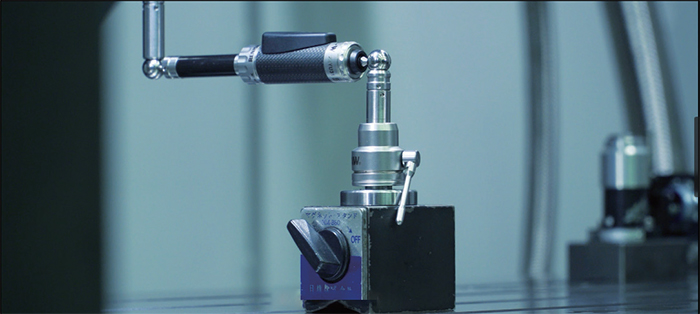
The testing process uses a ballbar, which functions as a specialised measurement tool to assess the circular movement accuracy of a machine. The ballbar system consists of two precision balls that are linked by a telescopic bar, which contains built-in sensors. One ball connects to the machine table while the other ball connects to the spindle.
The CNC machine operates in a circular motion during the test, which requires the ballbar to measure all deviations from a perfect circular pattern. The system enables operators plus maintenance crew members to assess the current condition of the CNC machine. They can execute maintenance tasks to stop problems from worsening. Ballbar testing has become an essential part of preventive maintenance in modern machining facilities because it provides fast, accurate, and reliable machine performance analysis.
The accuracy of CNC machining determines all aspects of machined component quality, functionality and reliability. Aerospace and medical manufacturing industries need parts to achieve micron-level precision because any small deviation will lead to component failure. CNC machining centres experience production difficulties because of their inadequate accuracy, which results in multiple operational problems that include:
• Inconsistent dimensions
• Poor surface finishes
• Improper assembly fit
• Increased scrap rate
• Higher production costs
The production speed plus operational efficiency of the system depend on precision. Machines with stable positioning accuracy can operate at higher feed rates while maintaining quality standards.
The system achieves greater productivity by reducing cycle times and boosting all operational activities. The need to maintain CNC precision exists for manufacturers who produce high-value components. It serves as a fundamental requirement that businesses must fulfil to satisfy their customers while minimising waste and staying competitive in their industry.
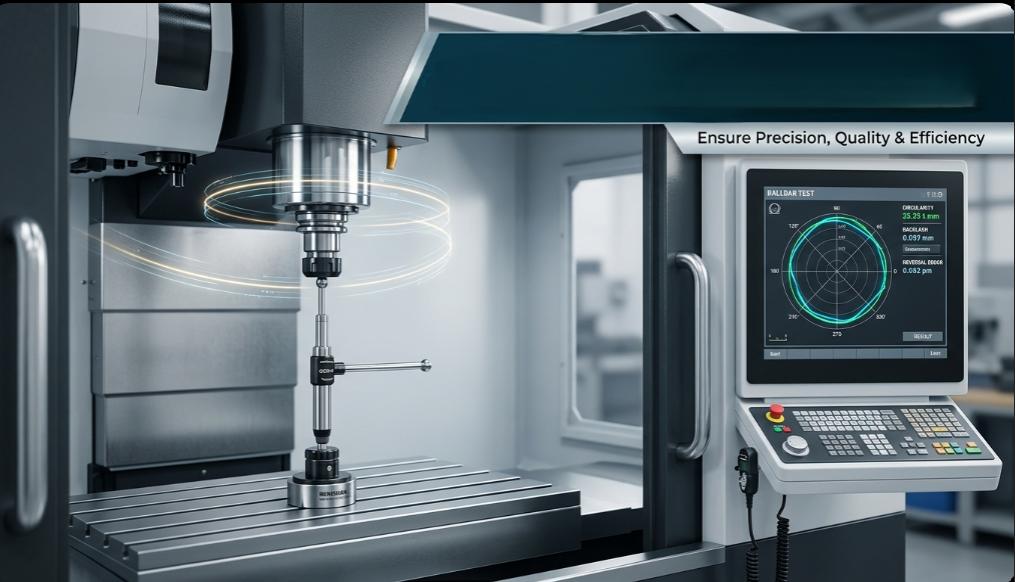
CNC machines undergo ballbar testing to measure their ability to perform circular interpolation operations. Machining processes require circular movement techniques since these methods effectively uncover machine errors. The test procedure involves the spindle of the machine executing circular movements while the ballbar tracks the space between two accurate balls.
The recorded shape will display a perfect circle when the machinery operates with complete precision. The circular pattern shows machine imperfections, which lead to the creation of defects in its design. The software detects these distortions and establishes which specific mechanical issues or control problems need to be addressed.
The testing process establishes fast results which take only several minutes to complete, yet deliver comprehensive details about the machine's operational state. Ballbar testing can detect errors in:
|
Error Type |
Impact on Machining |
|
Backlash |
Dimensional inaccuracy |
|
Servo mismatch |
Uneven movement |
|
Axis squareness error |
Poor circular accuracy |
|
Vibration |
Rough surface finish |
|
Mechanical looseness |
Reduced stability |
|
Pitch error |
Positioning inconsistency |
Backlash develops from excessive space between mechanical parts, which includes both ball screws and drive mechanisms. This condition leads to axis motion delays because the machine requires time to switch between different movement directions, which results in errors during machining work. Ballbar testing allows for precise measurement of backlash levels, which determines the need for machine modifications or parts replacement.
Servo systems control the axis movement in CNC machines. Cutting operations require all servo motors to operate at identical speeds because any speed difference between the two will cause the machine to lose its operational synchronisation.
Servo mismatch causes two main issues, which include irregular machine motion and incorrect interpolation to produce visible defects during machining. Ballbar analysis provides a fast method to identify these discrepancies.
Axis squareness errors occur when machine axes are not perfectly aligned. The machine's axis misalignment affects its geometric accuracy and creates obstacles during contour machining work. Regular ballbar testing maintains axis alignment within established tolerance limits.
Vibration in machines decreases cutting stability, which results in poor surface finishing. The presence of loose parts in machines results in faster tool degradation while also harming the spindle systems. Ballbar testing detects mechanical instability and vibration patterns before they lead to major production issues.
Ballbar testing maintains machine accuracy by finding positioning mistakes during the initial stages. The process enhances the precision of dimensions while improving the overall quality of machining.
The machine operates steadily, which results in reduced cutting vibrations and chatter. The cutting process leads to smoother surface finishes for machined components.
The correct operation of machines results in a decrease in faulty products. The process reduces waste materials while decreasing the total expenses of production.
The conventional methods for troubleshooting require extensive time to complete. Maintenance teams can use ballbar testing, which offers quick problem identification through its extensive diagnostic capabilities.
The process of continuous machine monitoring establishes reliability for extended periods while it decreases the chances of sudden equipment failures during production.
Machines that function with maximum precision enable higher feed rates and maintain consistent cutting performance, which results in higher production output.
|
Feature |
Ballbar Testing |
Traditional Inspection |
|
Testing Speed |
Fast |
Time-consuming |
|
Accuracy Detection |
High Precision |
Limited |
|
Data Analysis |
Software-Based |
Manual |
|
Downtime |
Minimal |
Higher |
|
Preventive Maintenance |
Excellent |
Moderate |
|
Error Identification |
Detailed |
Basic |
The industries that utilise ballbar testing for their operations depend on CNC precision because of their need to keep their machines running at optimal performance throughout their testing process.
The manufacturing of aircraft components requires the use of extremely tight tolerances because they need to achieve both high structural reliability standards. The testing process uses ballbar testing to ensure precise machining operations for vital aerospace components.
The automotive industry depends on precise machining to produce engine parts, transmission components and moulding tools. The process of ballbar testing verifies that mass production processes will produce identical results throughout the entire manufacturing process.
Medical implants and surgical instruments require precision at the micron level. The presence of tiny machining mistakes will result in dangerous outcomes for patients.
The production of precision moulds needs both smooth surface finishes and exact cavity geometry. The testing process uses ballbar testing to enhance contour accuracy while maintaining stable machining performance.
The presence of specific signs indicates that a CNC machine requires performance testing:
• Poor surface finish quality
• Increased machine vibration
• Dimensional inconsistency
• Unexpected tool wear
• Reduced cutting stability
• Difficulty maintaining tolerances
Ignoring these warning signs will lead to both expensive repairs and ongoing declines in production quality.
The frequency of testing requirements depends on machine operations, production levels, and the specific needs of the industry. The testing process for high-production environments requires ballbar testing every few months, while lower-volume workshops need to conduct testing twice a year.
Regular testing is especially important after:
• Machine installation
• Major repairs
• Machine crashes
• Spindle replacement
• Control system updates
The process of preventive testing enables manufacturers to find hidden issues in their machines so they can sustain accurate performance throughout many years.
Regular Machine Calibration
The process of periodic calibration enables machines to achieve their correct positioning and their proper axis alignment.
Proper Lubrication
The lubrication of machine components results in two benefits because it decreases wear and allows machines to operate without interruptions.
Monitoring Spindle Condition
Spindle vibration and thermal expansion have a direct impact on the quality of machining results. The process of regular inspection will boost machine reliability.
Keeping Machine Components Clean
The presence of dust, chips and other contaminants will lead to machine accuracy problems and shorten the lifespan of machine parts.
Routine Ballbar Testing
The system of routine performance checks allows manufacturers to keep their precision levels while preventing unexpected equipment breakdowns.
1. What is a ballbar test used for in CNC machines?
A ballbar test is used to evaluate the positioning accuracy and motion performance of CNC machines. It helps detect machine errors such as backlash, axis misalignment, and servo mismatch.
2. How long does a ballbar test take?
Most ballbar tests can be completed within a few minutes. Despite the short testing time, the process provides a highly detailed machine performance analysis.
3. Can ballbar testing improve machining accuracy?
Yes. Ballbar testing identifies hidden machine problems early, allowing maintenance teams to correct issues before they affect machining precision.
4. What problems can a ballbar test detect?
Ballbar testing can detect backlash, vibration, servo mismatch, pitch error, mechanical looseness, and circular interpolation inaccuracies.
5. How often should CNC machines be ballbar tested?
Testing frequency depends on machine usage and production requirements. Many manufacturers perform ballbar testing every three to six months.
6. Is ballbar testing necessary for new CNC machines?
Yes. Even new machines should be tested to verify installation accuracy and ensure optimal performance before production begins.
Ballbar testing has become an essential process for maintaining CNC machining precision in modern manufacturing industries. It allows manufacturers to detect hidden machine errors, improve machining accuracy, reduce scrap rates, and increase overall production efficiency. Regular testing not only improves machine reliability but also extends equipment lifespan and minimises unexpected downtime.
For manufacturers seeking high-performance CNC machining solutions, CNC Yangsen offers advanced CNC machining centres designed for precision, stability, and long-term productivity. Explore CNC Yangsen’s innovative CNC technologies today and achieve superior machining accuracy for your production needs.