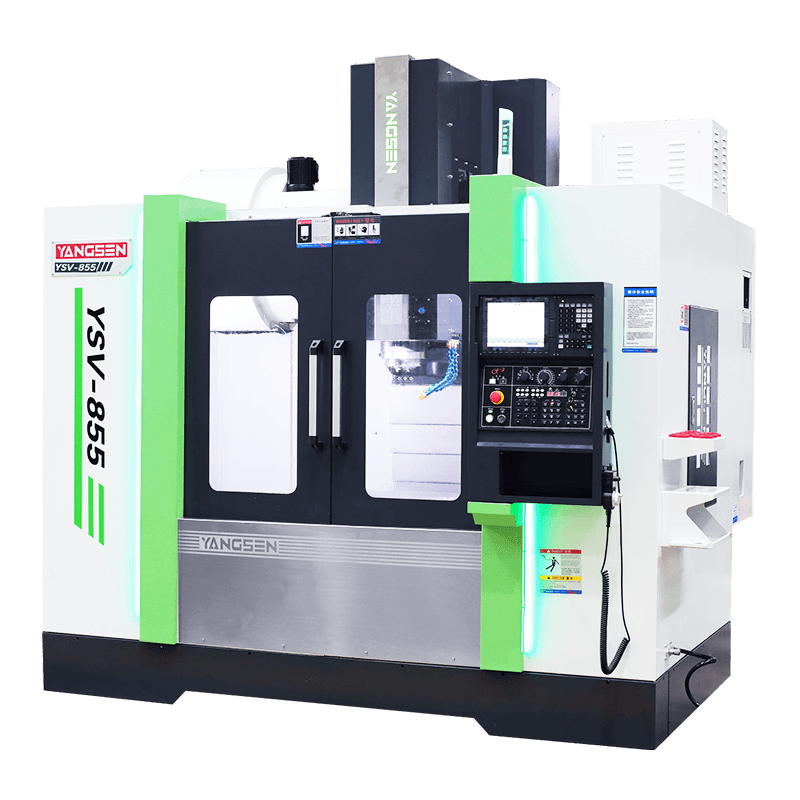
The workbench of the vertical machining center is usually a cross slider T-slot workbench structure, two sets of vertical motion mechanisms are responsible for the movement direction, and the X-direction feed table cover is responsible for the Y-direction feed guide rail. Workbench, horizontal machining center is only designed for movement in the X direction or Y direction. The form of the workbench is generally a grid screw hole workbench and a rotary workbench. It is relatively easy to switch between the two workbenches.
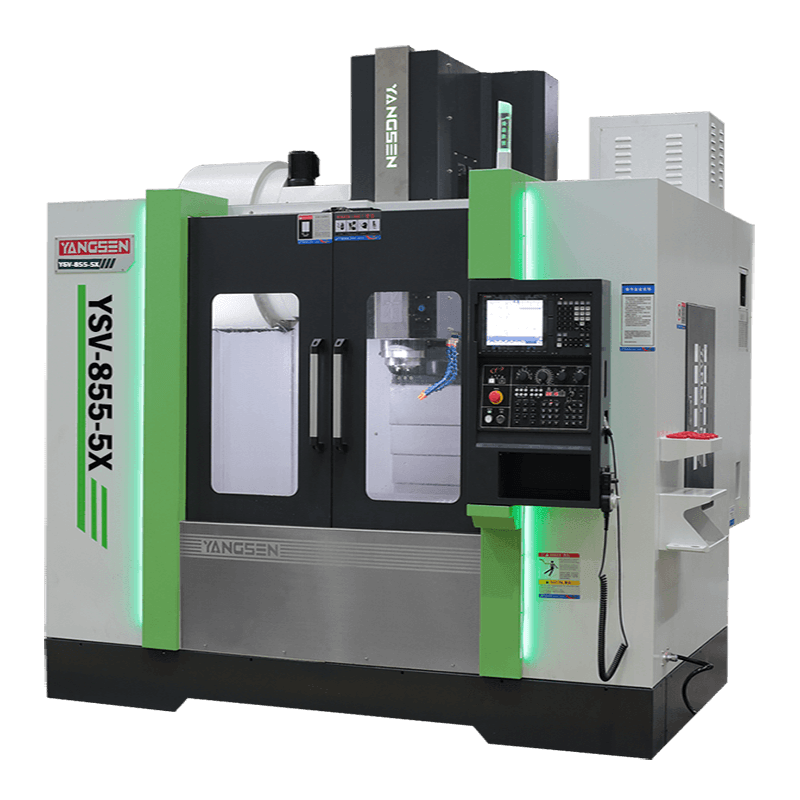
YSV-855-5X is customized, combined with 5-axis system by YSV-855. Used in the medical industry.
Vertical Machining, also known as milling, relies on rotary cutters to remove metal from a workpiece. Vertical machining occurs on a vertical machining center (VMC), which employs a spindle with a vertical orientation. With a vertically oriented spindle, tools stick straight down from the tool holder, and often cut across the top of a workpiece.
The workbench of the vertical machining center is usually a cross slider T-slot workbench structure, two sets of vertical motion mechanisms are responsible for the movement direction, and the X-direction feed table cover is responsible for the Y-direction feed guide rail. Workbench, horizontal machining center is only designed for movement in the X direction or Y direction. The form of the workbench is generally a grid screw hole workbench and a rotary workbench. It is relatively easy to switch between the two workbenches.
YSV-855-5X is customized, combined with 5-axis system by YSV-855. Used in the medical industry.
Vertical Machining, also known as milling, relies on rotary cutters to remove metal from a workpiece. Vertical machining occurs on a vertical machining center (VMC), which employs a spindle with a vertical orientation. With a vertically oriented spindle, tools stick straight down from the tool holder, and often cut across the top of a workpiece.