
A vertical machining center (VMC) can handle many machining tasks. But if your parts require frequent setups, chip buildup affects cutting, or production demands keep increasing, a horizontal machining center (HMC) may be a better choice.
An HMC can reduce setup time, improve chip removal, and increase productivity. However, it is not always the right investment. This guide explains 10 reasons to choose an HMC over a VMC, helping you decide which machine best fits your production needs.
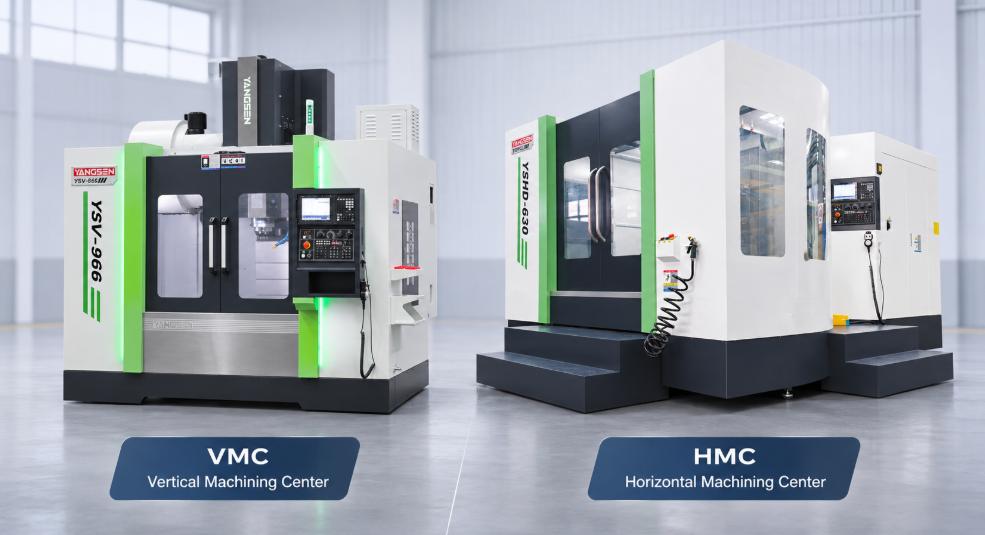
The main difference between a horizontal machining center (HMC) and a vertical machining center (VMC) is the spindle orientation. An HMC has a horizontal spindle, while a VMC has a vertical spindle. This difference affects how you set up workpieces, remove chips, and perform machining operations.
A VMC is often suitable for flat parts, molds, and jobs that require machining mainly from above. An HMC is generally better suited for box-shaped parts, multi-side machining, and repeated production.
| Feature | HMC | VMC |
| Spindle Orientation | Horizontal | Vertical |
| Machining Access | Multiple sides with rotary table | Mainly top surface |
| Chip Removal | Easier gravity-assisted removal | Chips may collect on the workpiece |
| Workpiece Setup | Fewer setups for multi-side parts | May require repositioning |
| Typical Applications | Housings, engine blocks, valve bodies | Plates, molds, general parts |
| Initial Cost | Generally higher | Generally lower |
If your current VMC requires frequent setups, struggles with chip removal, or cannot keep up with production demands, an HMC may offer a more efficient solution. Here are 10 situations where choosing an HMC can make a difference.
Machining parts such as gearbox housings, valve bodies, and engine blocks often requires access to several sides. On a standard 3-axis VMC, you may need to remove and reposition the workpiece several times to complete these operations.
An HMC with a rotary table allows you to machine multiple faces in one setup. This reduces handling time and helps maintain consistent positioning between machined surfaces. It is especially useful for box-shaped parts with holes and features on different sides.
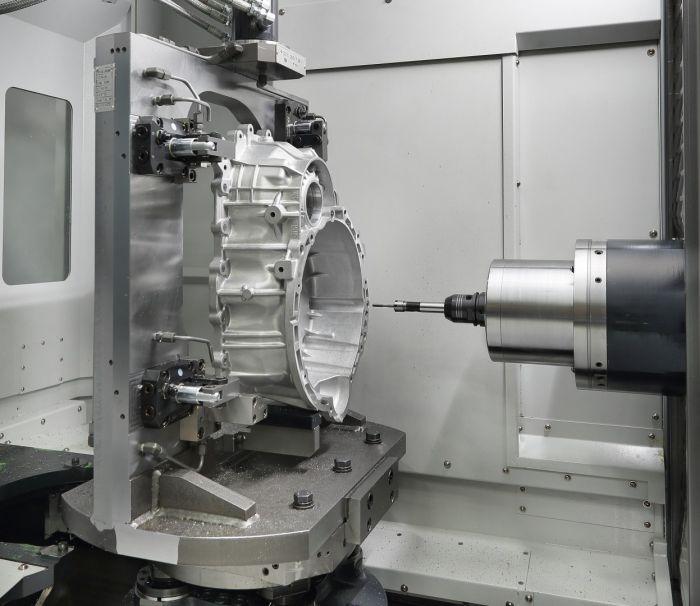
Every time you remove and reposition a workpiece, you spend time on clamping, alignment, and checking its position. For complex parts, these steps can take a significant part of your production time.
An HMC can reduce repeated setups by allowing you to reach different machining faces through table rotation. You spend less time repositioning parts and more time cutting, especially when producing the same components repeatedly.
Chips can collect inside pockets, holes, and around cutting tools during machining. If they are not removed properly, they may cause tool wear, poor surface finishes, or interruptions for cleaning.
With an HMC, the horizontal spindle arrangement allows many chips to fall away from the cutting area under gravity. Combined with a suitable coolant and chip conveyor system, this helps keep the cutting area clear during long machining cycles.
When your production volume increases, even small delays between machining operations can add up. Frequent setups, manual handling, and machine idle time may prevent you from meeting delivery schedules.
An HMC can improve productivity by combining multiple operations into fewer setups. For repeated production of complex parts, this reduces non-cutting time and allows you to produce more finished components within the same working hours.
When a part requires holes, slots, or surfaces on different sides, maintaining their relative positions can be difficult if you repeatedly remove and reclamp it.
An HMC with an accurate rotary table can machine several faces without changing the original workholding setup. This reduces errors caused by repositioning and helps maintain consistent geometric relationships between features.
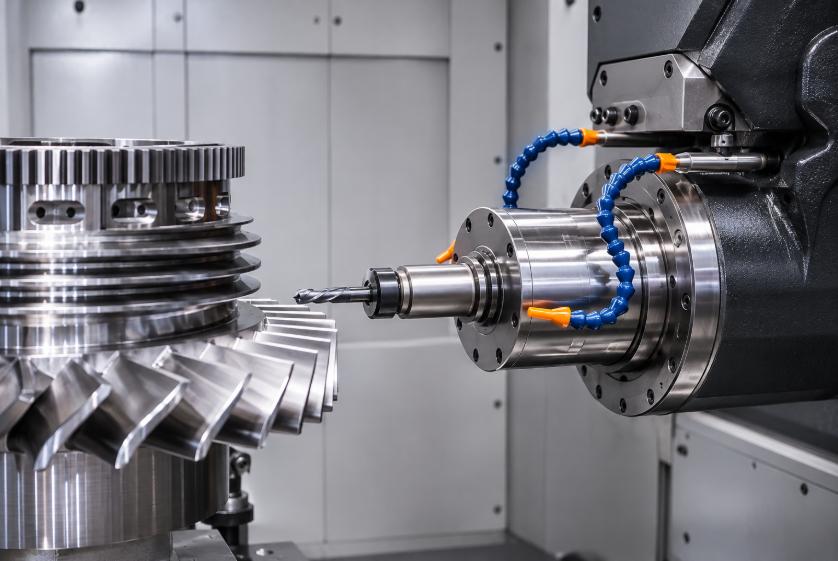
Heavy milling and deep boring require sufficient machine rigidity, spindle torque, and stable tool support. If your current machine vibrates during cutting, you may need to reduce cutting parameters, which increases cycle time.
Many HMCs are designed with rigid structures and spindle configurations suitable for demanding cutting operations. They can be useful for machining cast iron and steel housings with deep bores or large material removal requirements.
On a machine with a single worktable, loading and unloading usually require the spindle to stop. When each part takes only a short time to machine, these interruptions can reduce overall productivity.
An HMC equipped with an automatic pallet changer (APC) allows you to prepare the next workpiece while the machine processes the current one. Once machining is complete, the pallets can be exchanged, reducing the time the spindle waits between jobs.
If you produce many identical small or medium-sized components, loading one part at a time may limit your output. Each loading cycle adds handling time.
An HMC can use tombstone fixtures to hold several workpieces on different faces of a fixture. With a rotary table, the machine can access these parts in sequence. This arrangement is useful for repeated production when the workpieces, fixtures, and tool paths allow sufficient clearance.
Manual loading and frequent operator checks can make it difficult to keep machines running for extended periods, especially during repeated production.
HMCs can be integrated with pallet pools, robotic loading systems, and automated production cells. These systems help you prepare and process workpieces with less manual handling. If you plan to expand production automation, an HMC with suitable automation options may provide more flexibility for future growth.
A lower machine purchase price does not always mean lower production costs. If your VMC requires several setups, frequent operator involvement, and long processing times, these costs can increase with every part you produce.
An HMC may reduce your cost per part by shortening setup time, improving machine utilization, and supporting multi-part machining. Although the initial investment is generally higher, the savings can become significant in repeated production.
An HMC offers advantages for multi-side machining and repeated production, but a VMC may be a more practical and cost-effective choice for your workshop in these situations:
If your VMC already meets your accuracy, cycle time, and production requirements, switching to an HMC may not provide enough benefits to justify the additional investment.
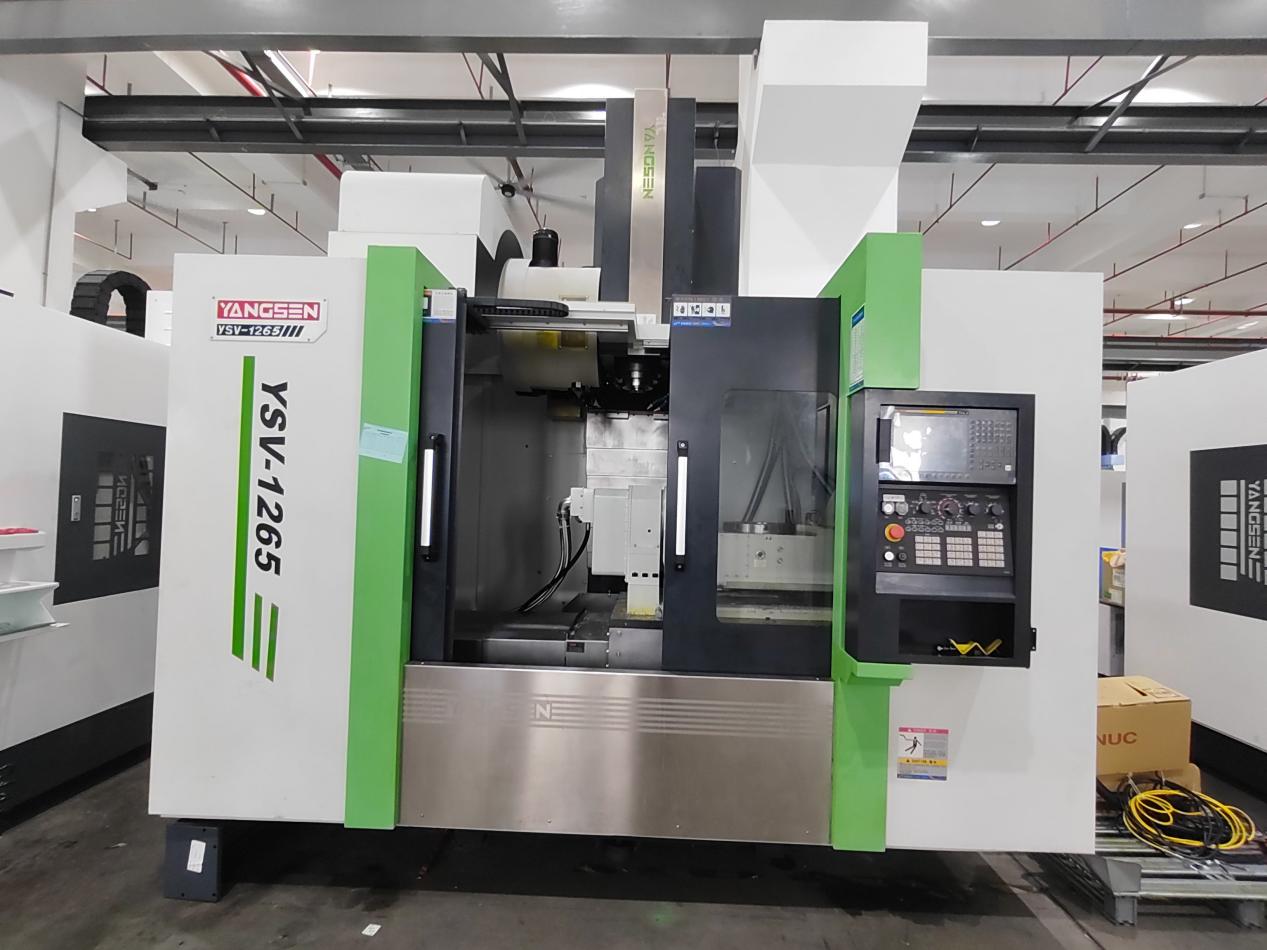
An HMC generally costs more than a VMC, so the decision should depend on how much it can improve your production efficiency and reduce long-term costs.
Start by reviewing how much time and money you spend producing each part on your current VMC. Consider setup time, cutting time, labor, tool costs, and machine downtime.
Then compare these costs with the expected performance of an HMC. If fewer setups and higher machine utilization can significantly reduce your cost per part, the higher initial investment may be worthwhile. Remember to include maintenance, tooling, fixtures, and operating costs in your comparison.
Before investing in an HMC, check whether your production needs justify its capabilities. Focus on these factors:
Workpiece complexity: Do your parts require machining on several sides?
Production volume: Will you produce enough parts to benefit from shorter cycle times?
Accuracy requirements: Can fewer setups help you maintain tighter tolerances?
Future production plans: Will you need more capacity or automation?
An HMC is more likely to deliver a good return on investment when you regularly produce complex parts in medium to high volumes. For simpler jobs or occasional production, a VMC may remain the more economical choice.
Once you decide that a horizontal machining center (HMC) fits your production needs, the next step is choosing a machine that can handle your workpieces and machining requirements. Focus on these key specifications:
| Key Factor | What You Should Check |
| Workpiece Size and Weight | Make sure the machine can accommodate your largest workpiece, including its fixture. |
| Table Size and Load Capacity | Check that the table provides enough space and supports the total weight of your setup. |
| Spindle Speed and Torque | Choose specifications that match your workpiece material and cutting requirements. |
| Axis Travel and Clearance | Ensure the machine can reach all required machining areas without interference. |
| Tool Magazine Capacity | Check whether it can hold all the tools needed for your machining operations. |
| Rotary Table and Pallet Changer | Consider indexing accuracy and automatic pallet changing if you need multi-side machining or higher production output. |
You should also consider machine accuracy, control systems, and available automation options. The right HMC is not necessarily the largest or most powerful model, but the one that meets your machining needs without unnecessary costs.
1. Is an HMC more accurate than a VMC?
Not necessarily. Both HMCs and VMCs can achieve high machining accuracy. However, an HMC can reduce repositioning errors when machining multiple sides of a workpiece in one setup. Actual accuracy depends on machine rigidity, positioning accuracy, fixtures, and machining conditions.
2. Is an HMC worth it for small-batch production?
An HMC can be worthwhile for small batches if your parts require complex multi-side machining or frequent setups. However, for simple parts with short machining cycles, a VMC is often more economical due to its lower initial cost and simpler setup.
3. What types of parts are best suited for an HMC?
HMCs are well suited for box-shaped and complex parts, such as engine blocks, gearbox housings, valve bodies, and pump housings. These parts often require machining on several faces, making an HMC useful for reducing setups and improving production efficiency.
4. Can an HMC replace a VMC?
An HMC can perform many operations normally done on a VMC, but it is not always a practical replacement. VMCs are often better for flat parts, molds, and top-side machining. Your choice should depend on workpiece geometry, production volume, and machining requirements.
5. Does an HMC always produce parts faster than a VMC?
No. An HMC may reduce total production time by minimizing setups and supporting multi-part machining. However, actual productivity depends on cutting parameters, workpiece complexity, fixtures, and machine configuration. For simple operations, a VMC may be equally fast or more efficient.
Choosing between an HMC and a VMC depends on your workpieces, production volume, and machining requirements. If you frequently machine multiple sides, spend too much time on setups, or need higher production output, an HMC may help you improve efficiency and reduce long-term costs.
However, a VMC remains a practical choice for simpler machining tasks and smaller production runs. Before investing, compare your actual production needs and costs.
If you're unsure which machine fits your workshop, CNC Yangsen can help you evaluate your workpiece drawings, machining requirements, and production goals to find a suitable solution.